Sunday, December 17, 2017

A Himalayan travelogue

Himalaya had been a fascination from my childhood days. I did not know anyone in person who had a Himalayan experience to check on the details. So, I have turned to other possible sources such as TV documentaries, travelogues, auto biographies of Yogis’ to understand about the great Himalaya.   As years went by, the pull of Himalaya had become irresistible and finally, in May 2017 I went on a Himalayan pilgrimage.

As recommended by one of my ex-colleagues and a dear friend, Mr Sasidhran, I booked for a two weeks Himalyan pilgrimage package with Vivekananda Travels. I had flown down to Delhi and joined other pilgrims, around 20 Keralites of different age groups, who also were booked for the trip. From there, by road, we started our pilgrimage to the “Devbhumi” (Uttarakhand).

The Bus

Haridwar

Our first destination was Haridwar, the ‘door’ to the upper Himalayas, where Hari (the deity of Badrinath) and Hara (the deity of Kedarnath) are situated. It is here that I first set my eyes on the majestically flowing great river Ganga (Ganges). We had a refreshing dip in the clear and cool Ganga, flowing in full force – it indeed was a very special and memorable experience.

The mighty Ganga

After the Gangasnan, we all sat down at the river bank to see the evening “Ganga aarti”. It is a religious prayer, a ritual of light and sound, that takes place at the Har-ki-Pauri ghat, every day at about 6.30pm.  A group of priests perform prayers with bowls of fire and singing hymns with the accompaniment of ringing temple bells. At the same time, hundreds of pilgrims and tourists from all parts of the world float "diyas" (small lighted lamps) and flowers on the surface of the flowing river, which is said to be blessed by the Goddess Ganga. It was a spectacular sight and indeed, a beautiful evening!
  

Ganga Aarti at haridwar


Rishikesh

The next day we visited the holy city of Rishikesh which has deep cultural and spiritual significance to the Hindus.  It is the world capital of yoga. The city of Rishikesh houses many temples and world-famous ashrams. There, we have visited the Parmarth Niketan , Geeta bhavan , Laxman Jhula etc.


Parmarth Niketan is said to be the largest ashram in Rishiksh , with 1000 rooms and beautiful big gardens, situated in the banks of Ganga. 


Geeta Bhavan is another riverfront ashram offering a temple, devotee housing, retail shops and a large banyan tree. Lakshman Jhula, named after Lakshman, brother and faithful companion of lord Rama, is an iron suspension bridge across the river Ganga.

Laxman Jula
Geeta Bhavan Banyan tree

Though we were in the foothills of Himalya, the day time was sunny and the scorching summer heat was unbearable.  The solace was the Ganga – unbelievably cool and refreshing!  In fact, it is from the next day, during our way to Guptkashi, that we started enjoying the real mystic beauty and the charming scenery of Himalayas.
Breakfast in a roadside dhaba


Vasishta Guha

Guha means cave. This cave is situated on the banks of the ganga ,about 120 feet below from the main road. It is a large natural tunnel which ends in a rather spacious cave. There is a Shivalinga at the farther end of the cave.  It is believed that Swami Purushottamanand (the grand disciple of Sri Ramakrishna Paramahansa and disciple of Swami Brahmananda) came across this cave in 1928 during his wanderings aroundHimalayas. He passed away on 13th Feb 1961, a Shivrathri day, at the age of 82. His samadhi stands at the courtyard right in front of the cave. His disciple, an old brahmachari (a Keralite) and couple of his assistants live there now.
Entrance to Vasishata Guha


The Pancha Prayags

They are the five sacred river confluences (junction of two or more rivers) in the Himalayas .Prayag means "place of sacrifice" in Sanskrit. The five prayags which you could visit in between Rishikesh and Badrinath are Vishnuprayag (Alakananda & Dhauli Ganga), Nandaprayag (Nandakini & Alakanand), Karnaprayag (Alakananda & Pindar), Rudraprayag(Mandakini & Alakananda) and Devprayag(Bhagirathi & Alakananda).  It was amazing to watch 2 rivers of different characters and colours to unite and flow as one!
Deva Prayag

Rudra Prayag


Kedarnath

We reached Phata , a small village located about 20kms away from Kedarnath, by early evening. Phata is famous for having a helipad used by pilgrims visiting Kedarnath . We stayed that night in a small hotel close to the helipad.  It was drizzling, contrary to the dazzling heat of downhills, it was shivering cool. And, it’s here that I have first seen the snow toped mountains.


Next day early morning, we travelled by bus to Sonaprayag and from there by jeep to Gaurikund. The tedious 22km (one way) trekking to Kedarnath begins from here. I was told that the old trek route was a nicely built pavement with fences, many shelters, shops and public conveniences in-between and was only a total walking distance of 14 kms. After the disastrous flood in 2013, the old route was completely washed away. From 2016 a new route opened, which is not so safe and comfortable. The construction and maintenance of the new route still continues.


In the bus to Sonaprayag

Gowri Kund To Kedarnath base


Bittu - carry people at the back  


Kedarnath is about 12000 feet above the sea level and is located in the Rudra Himalaya range. The temple is open from May to October only and would be closed during winter due to heavy snowfall.  The temple can be accessed by foot, mule/pony, porters or by helicopters.  I have chosen to go on a pony along with many of my group mates. The owners of the ponies came along (he walks all the way up!) with us and It took about 4-5 hrs to reach the base camp. It was a pleasant day, sunny and bright, the pony ride was comfortable and I was super excited. The great Himalaya is enchantingly beautiful, the scenery is picturesque.


At kedarnath base camp


Helipad on top of the mountain near Kedarnath temple

It was about 3pm that we reached the base camp and there is a 1 km walk from there to the temple. It is that walk which gave us the real Himalayan feel, freezingly cool, low oxygen level, hard to walk due to breathlessness…. with great difficulty inch by inch we walked towards the temple. There was a big que in front of the temple and we too joined. All on a sudden the climate changed, it started with a soft drizzle, which eventually grown into a heavy snow fall. Not the kind of soft cotton white snow which you have seen in movies and pictures, it was like big sugar crystals and was very painful when it falls own your body.

The tents before snow fall
after snow fall


I have started shivering uncontrollably and decided to go to the tents booked for the night. Fortunately, the tent had dormitory with bunker beds and thick quilts and they also provided attached toilets with hot water, a super luxury on top of a Himalayan mountain! None of us had solid food ever since we started the trekking. Some of us had mountain sickness like headaches, nausea etc. Whole night it rained and when we came out about 4am in the morning for temple darshan, whole area was thickly covered with ice.

the temple

The temple is believed to be built by Adi Sankaracharya and is made of massive stone slabs on a large rectangular platform. The walls of the inner sanctum, where the Shiv Linga is placed, are adorned with figures of various deities and scenes of Hindu mythology. A huge stone placed behind the temple by nature itself during the massive flood in 2013, believed to have protected the temple. Its intact, a wonder!

Behind the temple

The stone which miraculously saved the temple

After a hot tea and aloo parotta from a small shop we started our return journey, by foot. It was the toughest thing I have ever done in my life till date, it took me a gruelling 8 hours to reach Gowrikund. I was dead tired and the whole body was aching. From there we went to the hotel in Phata and had hot meal and slept like a log.


Snow walk


Next day, by about noon, we started our journey to Badrinath.  The mountain roads are very narrow and dangerous.  Himalayan mountain ranges are not the kind of hard rocks you imagine, they are pretty loose and there is the danger of flying rocks and land slides to be expected anytime.  Fortunately, we never had to face any such incidents during our trip. However, the continuous travel through the unfamiliar terrain and the strenuous Kedarnath trekking made me tired, mentally and physically.

under a deavadaru tree


Badrinath

It was in the late evening we reached Badrinath. And after checking in and refreshing ourselves, we went to meet the Ravalji, the chief priest of Badrinarayanan.  The Ravaljis are Namboodiri brahmins from north Kerala. I was told that this was as stipulated by the great Sankaracharya, who re-established the temple after freeing from Budhism. The Ravalji is a pleasant and courteous man and he spoke to us in Malayalam.
Badrivishal

balitarpan

The Sadhus

The ravalji


Next day early morning had a bath in the hot Thapta Kund (a natural hot spring) water and set out for the temple visit. The sight of the Nara Narayana Mountains, the snow covered Neelkant and the clear cool water of gushing  Alakananda, had a tranquilizing effect  on  my mental and physical tiredness. After the darsan , went to perform the Bali Tharpan, at Brhma Kapal ghat at the banks of Alakanda close to the temple.

Jothir Mat or Joshi Mat

Next day we started our journey to Joshi Mat, a monastery established by Adi Sankaracharya in the 8th century. We visited the math, temple and the Kalpavriksh (the wish fulfilling tree) which is believed to be one of the oldest trees (over 1000yrs) in India. It is an old mulberry tree which has a lot of historical and religious importance in India. The tree is preserved and protected by wired mesh now.
The Shiva temple and kalpa vrikha


The Kalpa Vrikha


That was the last leg of a memorable Himalay pilgrimage. From there we started our return journey to Delhi via Garwal Srinagar and Haridwar. The contact details of the travel agent is given below.


VIVEKANANDA TRAVELS (www.vivekanandatravelspltd.com)
 Ph: 0495-2727100, 2727800,  2722350 ,9846098080
 E-mail: calicut@vivekanandatravelspltd   


Friday, January 6, 2017

Autobiography of a Yogi – Sri Paramahansa Yogananda


Autobiography of a Yogi –  Sri Paramahansa Yogananda : have seen this book, repeatedly, in almost all Indian book stores and book fares I have gone into. Never felt like reading it. It’s not that I have an aversion towards spiritual leaders or books. In fact, I did read few Osho books, Swami Rama’s “Walking with a Himalayan Master” etc. in the past. Somehow I missed this one. Of late, while I was reading some other books /articles, this yogi’s name popped up several times and that is how I decided to buy and read his autobiography.

On the whole, I liked the book. It was like reading an interesting story, a mix of facts and fictions. Certain incidents/narrations are hard to believe, like ‘deathless saints’ and the resurrection of yogis etc, for a 21st century layman like myself. Could be, my ignorance or may be, because, I’m too much of a realistic person that makes me feel this way.

This book takes you through the mystic world of Indian saints and Yogis. It gives a clear account on their sacrifices, dedication, knowledge on various subjects and simple way of living. I was amazed to notice that most of the Yogis were well-educated and could handle multiple Indian and foreign languages fluently.    The efforts taken by Sri Yogananda in spreading the goodness of  Kriya Yoga across the globe indeed is remarkable and admirable.

The personality impressed me the most in this book is Sri Yukteshwar Giri, the spiritual guru of Sri Yogananda. He sounds so real, liked his philosophy, especially this one “Good manners without sincerity is like a beautiful dead lady. Straightforwardness without civility is like a surgeon’s knife, effective but unpleasant. Candour with courtesy is helpful and admirable.” And the strength and power of ancient Indian “Guru (teacher) Sishya( disciple) “ relationship is remarkable.  


Reading this book was a different experience. It kindled a desire in me to search further in to the world of Indian Yogis and saints for a better understanding of the spiritual world. 

Wednesday, November 30, 2016

Missing you on your Birthday , Amma…


Amma, it’s your birthday today
Memories of yester celebrations                       
Flooding back to my mind
Those special memories
Will always bring a smile

You were gone so soon
Never said you are leaving
Never said good bye
It’s so hard, wonder how to get over it….

My heart still aches with sadness
And secret tears still flow
If love could save your life
You would never have died

If only I could have you back for a while
Just to sit and talk like we used to do
If only I could hear your voice again
Just to listen to all those “sahasranamas”

I know my wish will never come true….
The empty space will never get filled
But, you are forever in my heart
And the loving memories will remain. 

Amma, you may not be here with me today
But, the day meant just the same…
How badly you are missed on your special day
is something you will never know……


Saturday, July 16, 2016

Lakshadweep….The coral paradise


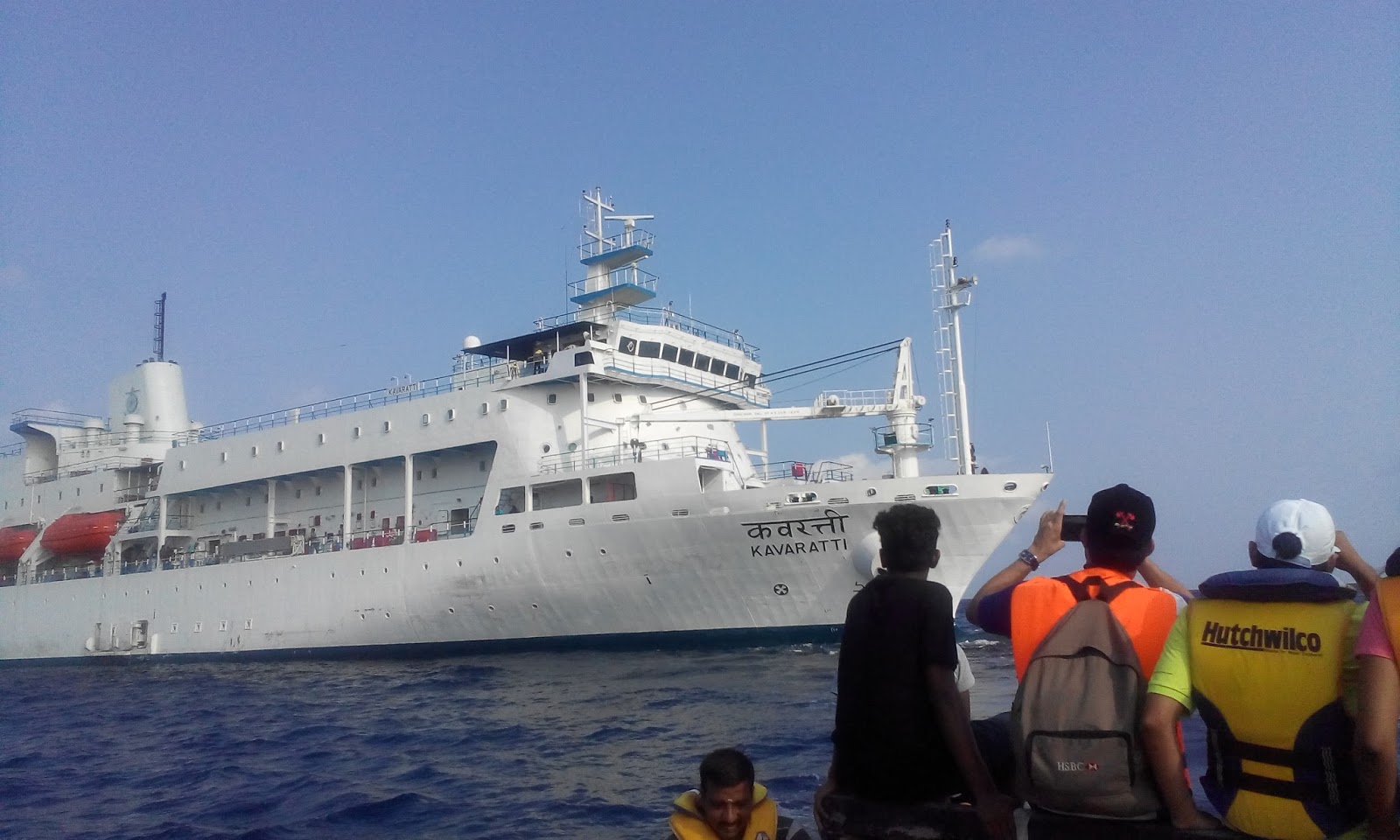
Lakshadweep, the smallest Union Territory of India, an archipelago of 36 Islands , is indeed a paradise on earth !  These Islands are only about 250kms away from Kochi - my home town, and though there are regular flights and ships from Kochi to Lakshadweep, I could visit the Islands only this year.  I did manage a last minute booking on the Lakshadweep Samudram sea package from Kochi in last May- a 5 day cruise to Kavaretti , Kalpeni and Minicoy islands.


My first voyage, though I am a shipping professional I have never sailed before, was an amazing and unforgettable experience.  The fear about the sea sickness ( the sail was cool , no sickness or anything) could not kill the excitement of the sail. The ship cabin was adequately furnished, clean and tidy.  To my luck, I had a single cabin for myself (I was the only tourist travelling alone, rest all were with family).  The sea view through the cabin window was super.  As a bonus there was a small balcony next to my cabin, during the 5 day voyage I spent most of the time there…watching and experiencing the sea .The food served on board was okay and the tour manager and other crew members were very friendly and courteous.


From the moment the ship unberthed and started sailing, I was drifted into a different world. The farther we sailed, the deeper the sea became, water colour changed into a deep blue..! Slowly the sun set and the night fell; the sea was very quiet and breezy. Next day morning we reached our first destination- Kavaratti. The view from my balcony was breathtakingly beautiful…the lush green island  was surrounded by  turquoise blue water lagoon!!  


The ship anchored in the open sea and to reach the Island the passengers and tourists had to shifted to small wooden boats. The jump from the ship to the boat was great fun. The ship crew and the people on the boat took utmost care on the tourists’ security. All were strictly advised to wear life jackets while on the boat.


The Kavaratti Island, the capital of Lakshadweep, welcomed  with tender coconut, one thing which is in abundance there.  The place is fresh, clean and pristine. Absolutely nil pollution as there are only few vehicles , islanders uses cycles and motor bikes for commuting in and around and no factories around. Everything, except fish and coconut, will have to be brought from the main land. Schooling is possible in Islands; however they will have to come to Kerala, specifically Kochi, for higher education, hospitals, shopping etc. Rice and fish is the common food. Almost everyone speaks Malayalam (the language spoken in Kerala), but I could not understand a word of their local  language ‘Jesery’.


I spend the day on the “sugar” sanded beach, just lazed around, didn’t participate any of the water sports (snorkelling, scuba diving, water scooter…), just talked to the local people and tried to understand more about their island life.  Almost 100% of the population is Muslim .One interesting thing is that; in Lakshadweep the boy who pays dowry to the girl’s house and after the wedding the boy stays at the girl’s house!! The lunch was simple with rice, tuna fish and vegetables.  There were cultural programme in the evening with tea and snacks. By about 6pm returned to ship to sail to next destination- Minikoy.


It’s in Kalpeni Island that I participated in water sports – scuba diving. The diving club has certified and trained divers to assist the freshers. They did give a crash course on scuba, the signs to be learned (you communicate using signs under water)  etc before taking  to the tip of that Island. There, the instructor gave a short training in the shallow water about the usage of scuba mask  and went on a speed boat into the deeper sea. I was shifted to a floating pontoon and from there with the assistance of the instructor dived into the open sea… OMG …! The coral world underneath was spectacular….different colours of corals, fishes and other kinds of sea life. I never ever thought I will see them all live and touch them with my own hand  in my life !!!  But I did it, a dream come true….an experience which will last till my last breath.

Minicoy was our last destination of the 5 day cruise tour and it was a different experience. The people look a bit different and the local language is Mahl, though most of them speak Malayalam. The ladies attire was different from the other Islands’. There I have visited a village and met with local people. This island has more greenery and could see other trees and vegetation. And the lighthouse, which was established in 1885 by British, was a spectacular sight. The view from the top is picturesque.


The return voyage to Kochi was quite , I just enjoyed the beauty of the sea and the vastness of the horizon. The ship had some engine trouble at night and slowed down and hence we arrived behind schedule. Had to wait at the outer anchorage for few hours for the pilot to board and to bring the vessel to berth. The view of the “queen of Arabian sea- Kochi”  from the sailing ship is beautiful….


Note : For enquiries and bookings please contact : Mr N.B Hussain Manikfan, Manager(Information & Booking), SPORTS lakshadweep Tourism , W.Island, Kochi . Tel : +91 484 2668387/2666789, E-mail: laksports.reservation@gmail.com

Monday, February 8, 2016

“ JEEPNEY “ – The undisputed king of Philippine roads


When I decided to visit The Philippines last year, general feedback received was not so encouraging. To be honest, I too had my doubts and was extremely cautious when I landed in the Ninoy Aquino International Airport ,Manila. But, contrary to all the predictions and to my expectations, Philippine welcomed me warmly and all the Filipinos I met were caring, friendly and accommodative. For me personally, the Philippine visit remains one of the most memorable visits I ever had. I loved the place..
 
With the Manila Port professionals


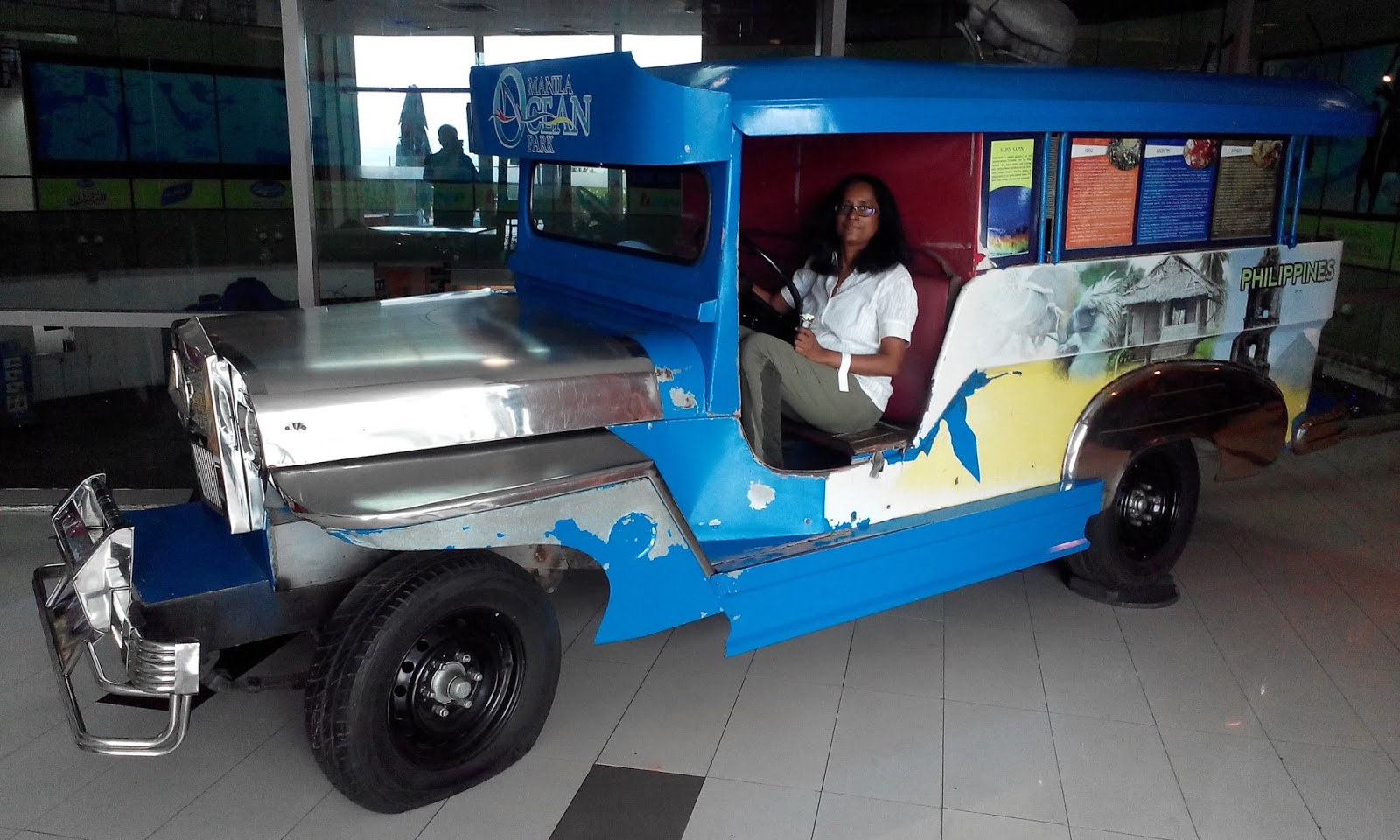
Having heard about the Philippine’s unbelievable traffic jams before, was not expecting anything amusing or interesting the first day when I hit the roads. But, the moment I got out of the hotel, a special ‘species’ of vehicle amused me and instantly stole my heart…! The Jeepney… the undisputed king of the Philippine roads..!


Jeepney is the most popular public transport system in the Philippines. They are known for its colourful art decorations and crowded seating arrangements. The word “JEEPNEY” itself is very interesting and understand it’s a blend of two words (portmanteau word) – Jeep and Knee – because people sit so close , touching knee to knee. Jeepneys are the symbol of Philippine art and culture.


Jeepneys are nor air conditioned but have open windows. They are always over crowded. If you ask the operator how many people you can accommodate in a Jeepney, the answer always is “ just one more “ !!! In the countryside they carry all kinds of goods, which includes chickens and pigs.


The origin of Jeepnies dates back to the World War-II, one of the remnants  of the American Military in the Philippines. Jeepnies are made out of the American Jeeps used in the war. When American’s left Philippines after defeating the Japanies, they left thousands of used army jeeps too. Later they were converted to Jeepnies by adding length and fixing two long seats face to face at both sides of the vehicle.
Jeepney in the Philippine University, Diliman